सविस्तर स्पष्टीकरण (Detailed Explanation):
अचूक उत्तर: पर्याय (3)
१. तार्किक नियम किंवा संबंध: या प्रश्नात पारंपरिक विधानाधारित तर्कशास्त्र आणि वेन आकृतीचा वापर केला आहे. 'कोणताही A हा B नाही' म्हणजे A आणि B यांच्यात सामायिक घटक नाहीत. 'सर्व A हे B आहेत' म्हणजे A चा संपूर्ण संच B च्या संचात समाविष्ट आहे. अशक्यतेच्या निष्कर्षासाठीही सर्व विधाने एकत्रितपणे तपासणे आवश्यक आहे.
२. पायरी-दर-पायरी मांडणी व विश्लेषण:
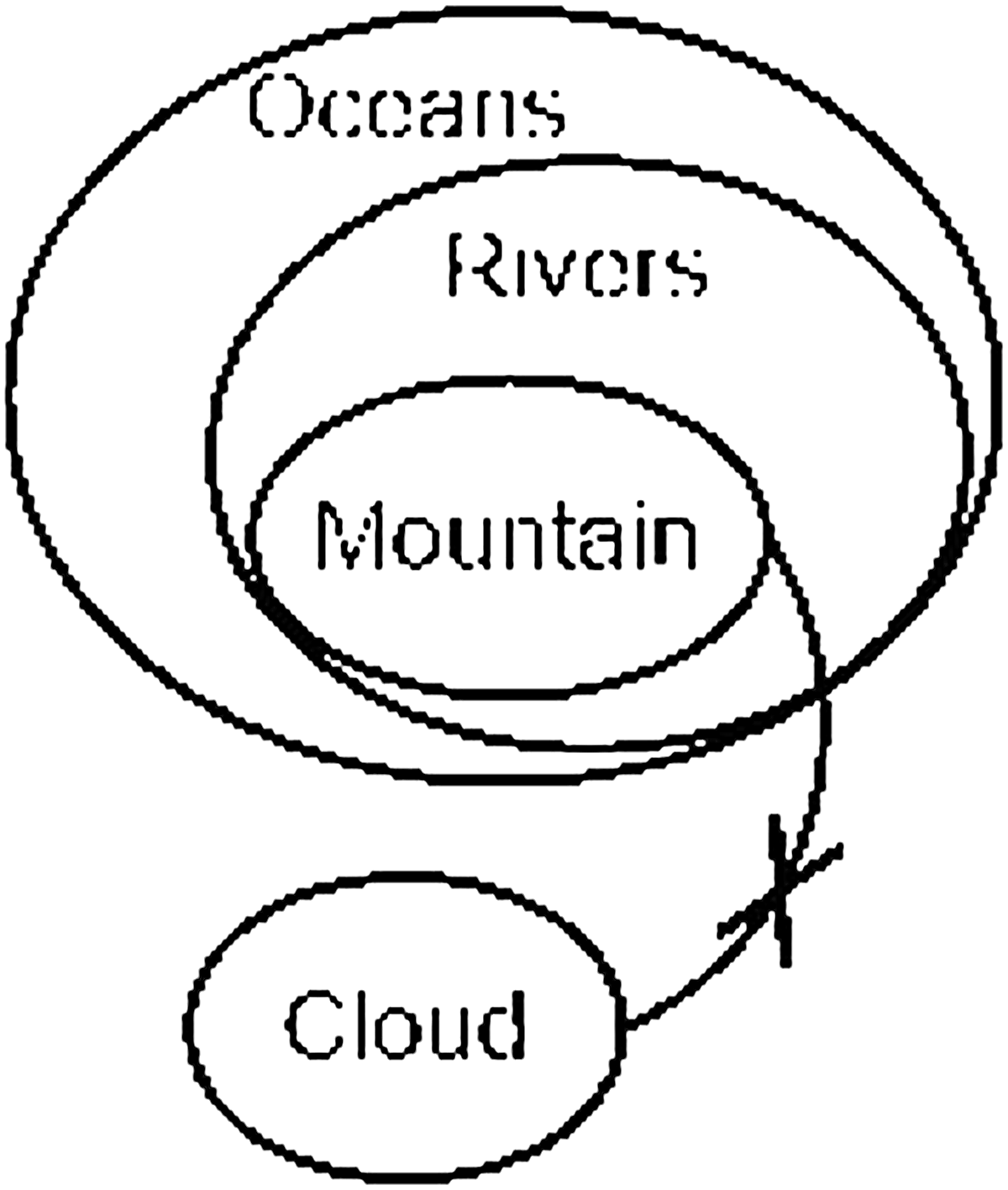
• विधान 1 नुसार ढग आणि डोंगर यांचे संच परस्परविरहित आहेत.
• विधान 2 नुसार डोंगरांचा संपूर्ण संच नद्यांच्या संचात आहे.
• विधान 3 नुसार नद्यांचा संपूर्ण संच महासागरांच्या संचात आहे.
• निष्कर्ष I: सर्व नद्या ढग आहेत असे मानल्यास, डोंगर हे नद्यांचे उपसंच असल्यामुळे सर्व डोंगरही ढग ठरतील. परंतु विधान 1 नुसार कोणताही डोंगर ढग नाही. त्यामुळे सर्व नद्या ढग असणे अशक्य आहे. निष्कर्ष I अनुसरण करतो.
• निष्कर्ष II: सर्व डोंगर नद्या आहेत आणि सर्व नद्या महासागर आहेत. म्हणून डोंगरांचा संपूर्ण संच महासागरांच्या संचात समाविष्ट आहे. निष्कर्ष II अनुसरण करतो.
३. अंतिम निष्कर्ष: दोन्ही निष्कर्ष विधानांमधून तार्किकरीत्या सिद्ध होतात. म्हणून पर्याय 3 योग्य आहे.
1. Logical rule or relationship: This is a conventional syllogism involving categorical statements and Venn-set relationships. 'No A is B' means that the sets A and B have no members in common. 'All A are B' means that the entire set A is contained within set B. An impossibility conclusion must be tested against all the statements together.
2. Step-by-step deductive analysis:
• Statement 1 establishes that clouds and mountains are mutually exclusive sets.
• Statement 2 establishes that every mountain belongs to the set of rivers.
• Statement 3 establishes that every river belongs to the set of oceans.
• Conclusion I: Suppose all rivers were clouds. Since all mountains are rivers, all mountains would then also have to be clouds. This contradicts Statement 1, which says that no cloud is a mountain. Therefore, it is impossible for all rivers to be clouds. Conclusion I follows.
• Conclusion II: All mountains are rivers, and all rivers are oceans. By transitivity of set inclusion, all mountains must be oceans. Conclusion II follows.
3. Final conclusion: Both conclusions are logically entailed by the statements. Therefore, Option 3 is correct.
स्पष्टीकरण आकृती (Solution Visual Diagram):
पहिला संभाव्य सापळा म्हणजे 'नद्यांना आणि ढगांचा थेट संबंध दिलेला नाही' म्हणून सर्व नद्या ढग असू शकतात असे मानणे. हा निष्कर्ष चुकीचा आहे, कारण नद्यांच्या संचात डोंगरांचा समावेश आहे आणि डोंगरांचा ढगांशी कोणताही समान घटक नाही. दुसरा सापळा म्हणजे निष्कर्ष I मधील 'अशक्य' या शब्दाकडे दुर्लक्ष करणे. येथे सर्व नद्या ढग आहेत ही शक्यता तपासली जाते; प्रत्येक नदी ढग नाही, एवढेच विधान अभिप्रेत नाही.
A common trap is to assume that, because no direct relationship between rivers and clouds is stated, all rivers could be clouds. This overlooks the indirect relationship through mountains. Mountains are rivers, but no mountain can be a cloud; therefore, the entire river set cannot consist of clouds. Another trap is to misread 'cannot all be clouds' as 'no river can be a cloud.' The conclusion rules out the possibility that every river is a cloud; it does not necessarily establish that rivers and clouds have no overlap whatsoever.
वेन आकृतीसाठी दोन नियम लक्षात ठेवा: 'सर्व A हे B आहेत' म्हणजे A ⊆ B; 'कोणताही A हा B नाही' म्हणजे A ∩ B = ∅. या प्रश्नात डोंगर ⊆ नद्या ⊆ महासागर आणि ढग ∩ डोंगर = ∅. त्यामुळे डोंगर ⊆ महासागर हा निष्कर्ष थेट मिळतो आणि सर्व नद्या ढग असण्याची शक्यता नाकारली जाते.
Remember two Venn-diagram rules: 'All A are B' means A ⊆ B, while 'No A is B' means A ∩ B = ∅. Here, Mountains ⊆ Rivers ⊆ Oceans, and Clouds ∩ Mountains = ∅. The first chain proves Conclusion II, while the disjoint relationship between clouds and mountains rules out the possibility that all rivers are clouds.
• पर्याय 1 चुकीचा: दोन्ही निष्कर्ष सिद्ध होत असल्यामुळे एकही निष्कर्ष अनुसरण करत नाही असे म्हणता येत नाही.
• पर्याय 2 चुकीचा: निष्कर्ष II बरोबर असला, तरी निष्कर्ष I देखील योग्य आहे. सर्व नद्या ढग असणे डोंगर आणि ढग यांच्यातील परस्परविरहित संबंधामुळे अशक्य ठरते.
• पर्याय 4 चुकीचा: निष्कर्ष I योग्य आहे; परंतु सर्व डोंगर नद्या आहेत आणि सर्व नद्या महासागर आहेत या समावेशक संबंधामुळे निष्कर्ष II सुद्धा अनिवार्यपणे सिद्ध होतो.
• Option 1 is incorrect: Both conclusions are supported by the given statements, so it is false that neither follows.
• Option 2 is incorrect: Conclusion II follows, but Conclusion I also follows because the assumption that all rivers are clouds would force mountains to be clouds, contradicting Statement 1.
• Option 4 is incorrect: Conclusion I follows, but Conclusion II is also necessarily true because the set of mountains is contained within the set of rivers, which is contained within the set of oceans.