सविस्तर स्पष्टीकरण (Detailed Explanation):
अचूक उत्तर: पर्याय (1)
योग्य उत्तर H; Th आहे.
स्पष्टीकरण आणि महत्त्वाचे मुद्दे:
• न्यूलँड्सची अष्टके
• मूलद्रव्यांचे त्यांच्या गुणधर्मांवर आधारित गटांमध्ये वर्गीकरण करण्याचा न्यूलँड्सचा अष्टक नियम हा एक प्रारंभिक प्रयत्न होता.
• 18 व्या आणि 19 व्या शतकात मोठ्या संख्येने नवीन मूलद्रव्ये शोधले गेले, ज्यामुळे मूलद्रव्यांची धातू आणि अधातू अशी सामान्य विभागणी कालबाह्य झाली.
• संबंधित गुणधर्म असलेल्या मूलद्रव्यांना शोधण्यासाठी आणि एकत्र गटबद्ध करण्यासाठी अनेक चाचण्या करण्यात आल्या.
• समकालीन आवर्त सारणीची स्थापना, न्यूलँड्सच्या अष्टक नियमासारख्या मूलद्रव्यांच्या वर्गीकरणाच्या पूर्वीच्या तंत्रांवर आधारित होती, हे लक्षात ठेवणे महत्त्वाचे आहे.
• अष्टक नियमानुसार, जेव्हा मूलद्रव्ये अणुवस्तुमानाच्या चढत्या क्रमाने मांडले जातात, तेव्हा प्रत्येक आठव्या मूलद्रव्यात समान गुणधर्म असतात.
• संगीत क्षेत्रात, जेथे प्रत्येक आठवा स्वर पहिल्या स्वराच्या बरोबरीचा असतो, न्यूलँड्सने मूलद्रव्यांमधील समानतेची तुलना केली. प्रत्येक मूलद्रव्याला अणुअंक देण्याचा हा पहिला प्रयत्न होता. तथापि, सामग्रीचे वर्गीकरण करण्याच्या या दृष्टिकोनाला वैज्ञानिक समुदायातून तीव्र विरोध झाला होता.
पूरक माहिती:
• न्यूलँड्सच्या अष्टक नियमाच्या मर्यादा
• न्यूलँड्सच्या आवर्त सारणीमध्ये, अनेक मूलद्रव्ये एकाच स्थितीत बसतात. उदाहरणार्थ, निकेल आणि कोबाल्ट एकाच स्लॉटमध्ये ठेवले गेले होते.
• मूलद्रव्यांचे गट त्यांच्या भिन्न वैशिष्ट्यांवर आधारे तयार केले गेले होते. उदाहरणार्थ, कोबाल्ट, निकेल आणि प्लॅटिनम यांसारखे अनेक धातू हेलोजन्ससह वर्गीकृत केले गेले होते.
• न्यूलँड्सच्या अष्टक नियमातील अष्टके केवळ कॅल्शियमपर्यंतच्या मूलद्रव्यांसाठी अचूक होती. जास्त अणुवस्तुमान असलेली मूलद्रव्ये अष्टकांमध्ये बसवता आले नाहीत.
• नंतर सापडलेल्या मूलद्रव्यांना अष्टकांच्या रचनेत सामावून घेता आले नाही. परिणामी, मूलद्रव्यांचे वर्गीकरण करण्याच्या या प्रणालीचा वापर करून नवीन मूलद्रव्ये शोधण्यासाठी कोणतीही जागा नव्हती.
The correct answer is H; Th.
Explanation & Key Takeaways:
• Newlands’ Law of Octaves (1865): Arranged elements in order of increasing atomic weights.
• Octaves concept: Every eighth element had similar chemical properties, like the octave in music.
• First element of the octaves: Hydrogen (H)
• Last element of the octaves: Thorium (Th)
• Octaves of Newland
• Early attempts at categorising components into groups based on their qualities included Newland's law of octaves.
• The 18th and 19th centuries saw the discovery of a large number of new elements, rendering obsolete the general division of elements into metals and non-metals.
• To find and group together elements with related properties, several tests were carried out.
• It is significant to remember that the establishment of the contemporary periodic table was based on earlier techniques of classifying elements, such as Newland's law of octaves.
•
According to the law of octaves, every eighth element possesses characteristics that are identical when the elements are ordered in ascending order of atomic mass.
•
In music, where every eighth note is equivalent to the first, Newlands likened the similarity between the elements to that. This was the first attempt to give each element an atomic number. However, this approach to categorising materials encountered strong opposition in the scientific community.
Related Concepts:
• Newland's Law of Octaves' limitations
• In Newland's periodic table, several elements fit into the same positions. Nickel and cobalt, for instance, were put in the same slot.
• Groups of elements were created based on their dissimilar features. For instance, several metals, such as cobalt, nickel, and platinum, were classed with halogens.
• The octaves of Newland's law was only accurate for elements up to calcium. It was impossible to fit elements with larger atomic masses within octaves.
• The octave design could not accommodate the later-found components. As a result, there was no room for the discovery of new elements using this system of classifying elements.
स्पष्टीकरण आकृती (Solution Visual Diagram):
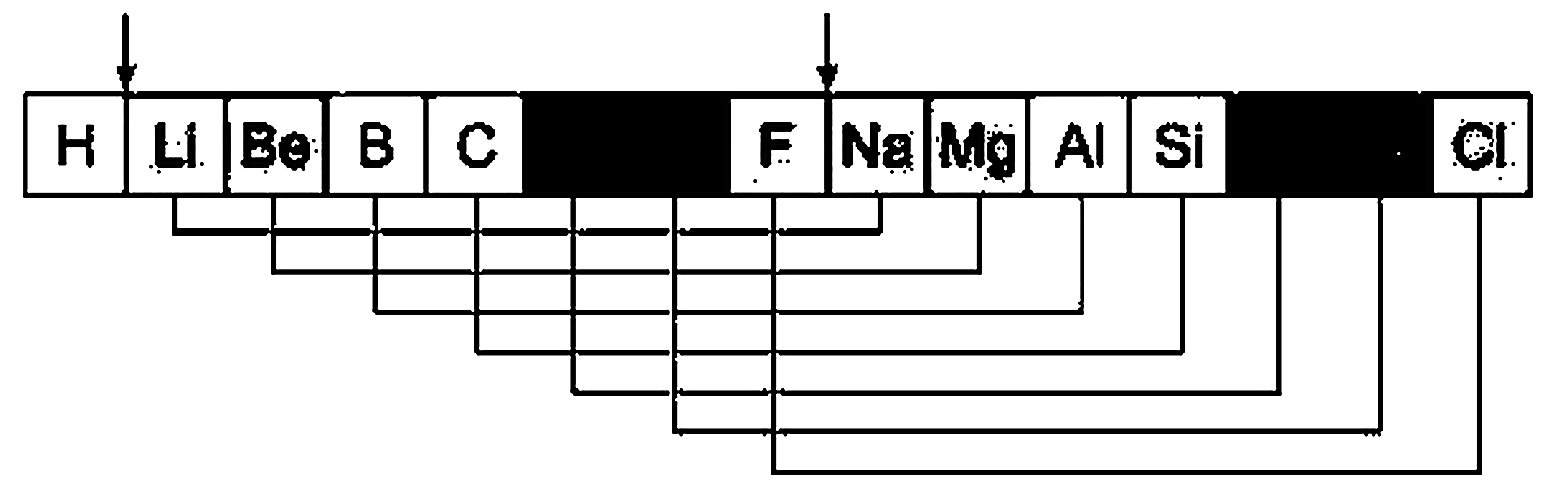
स्पष्टीकरणाची आकृती / संदर्भ तक्ता

Solution Diagram
परीक्षेतील संभाव्य चूक: विद्यार्थी अनेकदा पर्याय 2 ('Li; Na') आणि पर्याय 1 ('H; Th') यामध्ये गोंधळात पडतात. प्रश्न नीट वाचून संकल्पनेतील सूक्ष्म भेद लक्षात घेणे आवश्यक आहे.
Exam Trap: Candidates frequently confuse Option 2 ('Li; Na') with Option 1 ('H; Th'). Distinguish the exact context before marking.
नकाशा क्लृप्ती: स्थान व वैशिष्ट्ये — 'H; Th'. महाराष्ट्राच्या व भारताच्या प्राकृतिक रचनेमध्ये Geographyसाठी 'H; Th' हे अचूक स्थान/वैशिष्ट्य लक्षात ठेवा.
Map Trick: Landmark & Location — 'H; Th'. Anchor Geography directly to 'H; Th'.
🎯 पर्याय बाद पद्धत (Option Elimination Strategy):
• पर्याय 2 ('Li; Na'): हा पर्याय अयोग्य आहे. आयोगाच्या संदर्भानुसार अचूक उत्तर 'H; Th' हे ठरते.
• पर्याय 3 ('He; Ar'): हा पर्याय अयोग्य आहे. आयोगाच्या संदर्भानुसार अचूक उत्तर 'H; Th' हे ठरते.
• पर्याय 4 ('Mg; Ca'): हा पर्याय अयोग्य आहे. आयोगाच्या संदर्भानुसार अचूक उत्तर 'H; Th' हे ठरते.
• निष्कर्ष: त्यामुळे उर्वरित पर्याय बाद होऊन अचूक उत्तर पर्याय 1 ('H; Th') निश्चित होते.
🎯 Option Elimination Strategy:
• Option 2 ('Li; Na'): Incorrect. As per official verified records, 'H; Th' is the valid fact.
• Option 3 ('He; Ar'): Incorrect. As per official verified records, 'H; Th' is the valid fact.
• Option 4 ('Mg; Ca'): Incorrect. As per official verified records, 'H; Th' is the valid fact.
• Conclusion: Hence, eliminating incorrect options leads to Option 1 ('H; Th').
