Geography
Indian Climate
पडताळलेले उत्तर (Verified)
MPSC सराव प्रश्न:
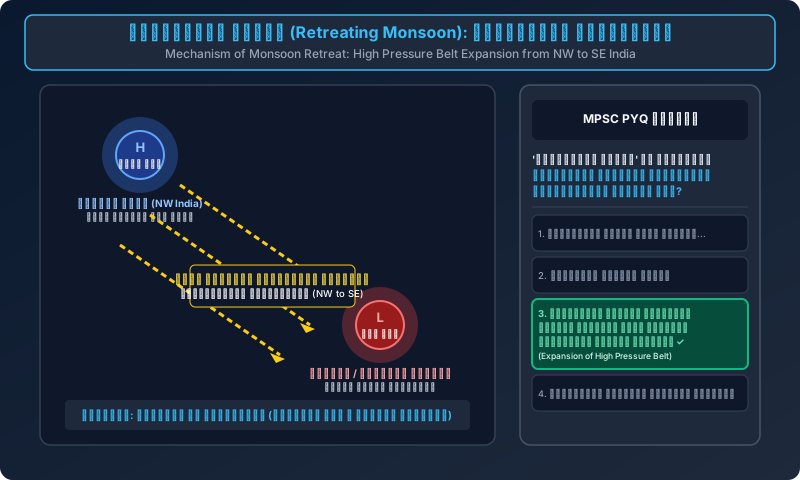
‘मान्सूनची माघार' हा भारतीय हवामानाचा आविष्कार खालीलपैकी कोणत्या वातावरणीय परिस्थितीचा परिणाम आहे ?
The climatic phenomena retreating monsoon is the result of which of the following atmospheric condition in India ?
प्रश्न आकृती (Question Diagram):
पर्याय (Options):
A
नैर्ऋत्य मान्सून वारे हिमालय पर्वतरांगांपर्यंत पोहचल्यानंतर ते तेथून माघारी फिरतात
B
सूर्याचे भासमान भ्रमण
C
अचूक उत्तर (Official Answer)
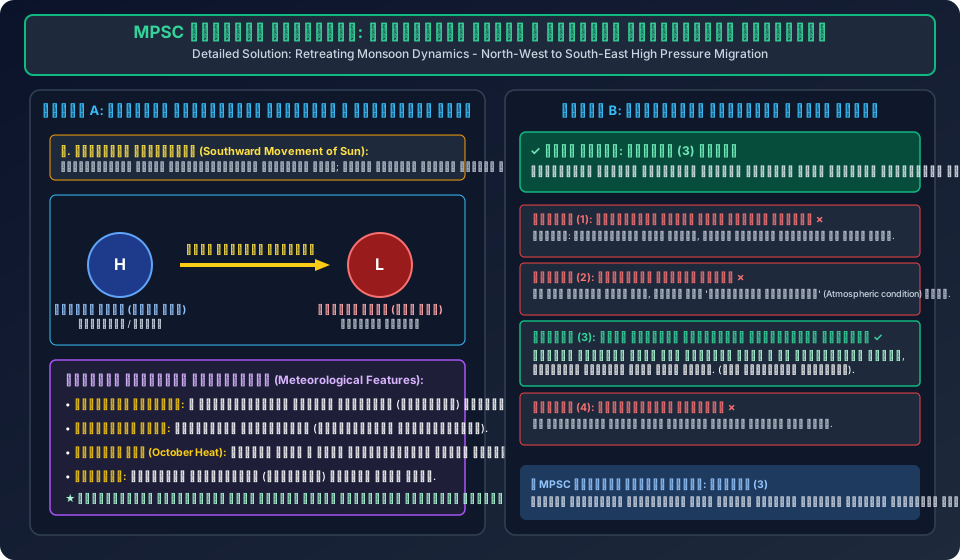
भारताच्या वायव्य भागाकडून आग्नेय भागाकडे उच्च वायुभार पट्ट्याचा होणारा विस्तार
D
भारतीय उपखंडात निर्माण होणारी वायुभारातील भिन्नता
सविस्तर स्पष्टीकरण (Detailed Explanation):
अचूक उत्तर: पर्याय (3)
योग्य उत्तर पर्याय 3 आहे.
स्पष्टीकरण आणि महत्त्वाचे मुद्दे:
• मान्सूनची माघार ही सूर्याची दक्षिणेकडे हालचाल आणि नैऋत्य-पश्चिम मान्सूनच्या माघारीमुळे होते.
• उष्ण कटिबंधी न्यून-दाबक्षेत्र संक्रमणाच्या टप्प्यात उद्भवते, ज्यामुळे जीवन आणि मालमत्तेचे मोठे नुकसान होते.
• तमिळनाडू आणि आंध्र प्रदेशमध्ये हिवाळ्यातील पावसाचा काही भाग कमी होत असलेल्या मान्सूनमुळे होतो.
• अरबी समुद्रातील वादळे, जरी क्वचितच, ऑक्टोबर आणि नोव्हेंबरमध्ये 12°N आणि 17°N दरम्यान येतात.
• ऑक्टोबर महिन्यात, मान्सूनच्या प्रस्थानाचा परिणाम निरभ्र, ढगविरहित आकाश, उच्च तापमान आणि उच्च आर्द्रता यांमध्ये होतो. या उष्ण आणि अप्रिय हवामानाला कधीकधी "ऑक्टोबर हीट" असे संबोधले जाते.
• अरबी समुद्र आणि हिंदी महासागर या मान्सूनच्या दोन शाखा आहेत.
पूरक माहिती:
माघारी जाणारा मान्सून
• माघारी जाणाऱ्या मान्सूनला ईशान्य मान्सून किंवा मान्सूननंतरचा ऋतू असेही म्हणतात.
• हा तो काळ आहे जेव्हा नैऋत्य मोसमी वारे भारतीय उपखंडातून माघार घेऊ लागतात.
• हे ऑक्टोबरच्या सुरूवातीस घडते आणि ईशान्य मोसमी वारे भूभागाकडे वाहू लागतात. ऑक्टोबर-नोव्हेंबर या हिवाळ्यात मान्सून मागे पडतो.
माघारी जाणाऱ्या मान्सून हंगामाची काही प्रमुख वैशिष्ट्ये आहेत:
• मान्सूनचा पाऊस कमी होऊ लागतो आणि वाऱ्याची दिशा बदलू लागते. म्हणून, हे स्वच्छ आकाश आणि कमी आर्द्रता पातळी द्वारे दर्शविले जाते.
• दक्षिणेकडील द्वीपकल्पासाठी पावसाचा मुख्य स्त्रोत असल्यामुळे भारताच्या अनेक भागांसाठी माघार घेणारा मान्सून हंगाम गंभीर आहे. यामध्ये विशेषत: तामिळनाडू, पुडुचेरी आणि किनारी आंध्र प्रदेशचा समावेश आहे.
• या मोसमात, बंगालच्या उपसागरात चक्रीवादळ आणि दाबामुळे मुसळधार पाऊस होऊ शकतो. यामुळे काही भागात पूर आणि भूस्खलन होऊ शकते.
• माघारी जाणारा मान्सून भारतात हिवाळ्याच्या हंगामाची सुरुवात देखील करतो. देशभरातील तापमान हळूहळू कमी होत आहे.
• माघारी जाणाऱ्या मान्सूनवर शेती आणि इतर संबंधित कामे मोठ्या प्रमाणात अवलंबून असतात. पिके कापणीची आणि हिवाळ्याच्या तयारीची ही वेळ आहे.
स्पष्टीकरण आकृती (Solution Visual Diagram):