
General Science
Physics
पडताळलेले उत्तर (Verified)
MPSC सराव प्रश्न:
प्रकाशीय तंतु खालीलपैकी कोणत्या तत्त्वांवर आधारित आहे? a. प्रकाश परावर्तन तत्त्व b. प्रकाश अपवर्तन तत्त्व c. एकूण अंतर्गत परावर्तन तत्त्व d. प्रकाशाच्या अपस्करणाचे तत्त्व
Optical fibre is based on which of the following principles? a. Principle of reflection of light b. Principle of refraction of light c. Principle of total internal reflection d. Principle of dispersion of light
पर्याय (Options):
A
a, b आणि c
B
अचूक उत्तर (Official Answer)
केवळ c
C
b आणि d
D
केवळ d
सविस्तर स्पष्टीकरण (Detailed Explanation):
अचूक उत्तर: पर्याय (2)
योग्य उत्तर केवळ c आहे.
• प्रकाशीय तंतु
• जेव्हा प्रकाश किरण प्रकाशीय तंतुमध्ये प्रवेश करतो, तेव्हा तो एकूण अंतर्गत परावर्तन करतो कारण किरणाने तयार केलेला कोन क्रांतिक कोनापेक्षा मोठा आहे.
• म्हणून केवळ c हा योग्य पर्याय आहे.
• संपूर्ण अंतर्गत प्रतिबिंब
• एकूण अंतर्गत परावर्तन हे पाणी किंवा काचेसारख्या चमचमीत प्रकाशाच्या किरणाचे संपूर्ण प्रतिबिंब आहे.
• आपतन कोन हा विशिष्ट मर्यादित कोनापेक्षा म्हणजेच क्रांतिक कोनापेक्षा जास्त असेल, तर ही घटना घडते.
• जर प्रकाश घन माध्यमातून (पाण्याकडे) विरळ माध्यमाकडे (हवेकडे) जात असेल आणि आपतन कोन (i) हा क्रांतिक कोनापेक्षा (c) मोठा असेल, म्हणजेच i>c, तर प्रकाश संपूर्ण अंतर्गत प्रतिबिंब नावाच्या घटनेकडे जातो.
• प्रकाशाचे अपवर्तन
• एका माध्यमातून दुसऱ्या माध्यमाकडे जाताना सामाण्यापेक्षा दूरवर प्रकाशाचे वाकणे.
• उदाहरणार्थ, पाण्याच्या चंचुपात्रात ठेवलेल्या तुटलेल्या पेन्सिल किंवा नाण्याचे दृश्य.
• प्रकाशाचे अपवर्तन
• प्रतिबिंबाच्या कोनाच्या बरोबरीने आपतन कोन असलेल्या पॉलिश पृष्ठभागावरून आपतन किरण प्रतिबिंबित होतो.
• प्रकाशाचे अपस्करण
• पांढऱ्या प्रकाशाची ही प्रक्रिया त्याच्या घटक रंगात विभागली जाते त्याला अपस्करण असे म्हटले जाते.
• उदाहरणार्थ जेव्हा प्रकाश सूचीमधून जातो तेव्हा तो त्याच्या रंगांच्या पंक्तीमध्ये विभागला जातो (जांभळा, आकाशी, निळा, हिरवा, पिवळा, केशरी आणि लाल रंग ज्याला VIBGYOR म्हणतात).
• डेटा पाठविण्यासाठी आणि प्राप्त करण्यासाठी संप्रेषण उपकरणांमध्ये प्रकाशीय तंतु वापरले जातात.
• प्रकाशीय तंतू तारेचे फायदे
• डेटा सुरक्षा उत्कृष्ट आहे.
• हे खर्चिक आहे.
• त्याचा हस्तक्षेपाचा परिणाम होणार नाही.
• सिग्नलचा ऱ्हास कमी.
• पातळ आणि ज्वलनशील नसलेले.
• किफायतशीर.
• कमी वीज वापर.
• प्रकाशीय तंतु एंडोस्कोपीमध्येदेखील वापरले जातात.
स्पष्टीकरण आकृती (Solution Visual Diagram):

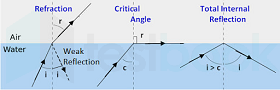

Solution Diagram