
Logical Reasoning
Critical Reasoning: Statement-Assumption, Cause-Effect
FMT-01
पडताळलेले उत्तर (Verified)
MPSC सराव प्रश्न:
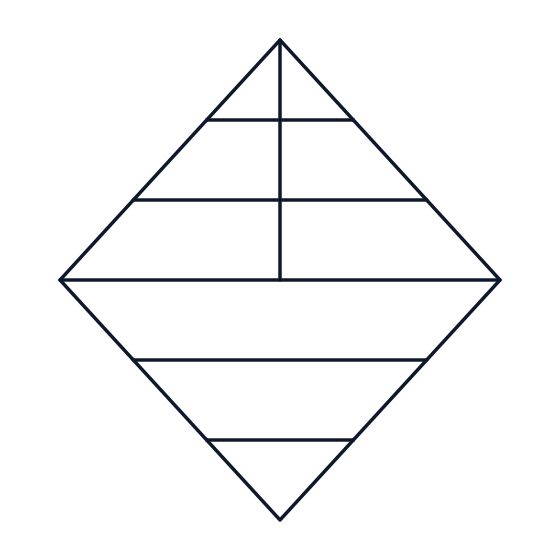
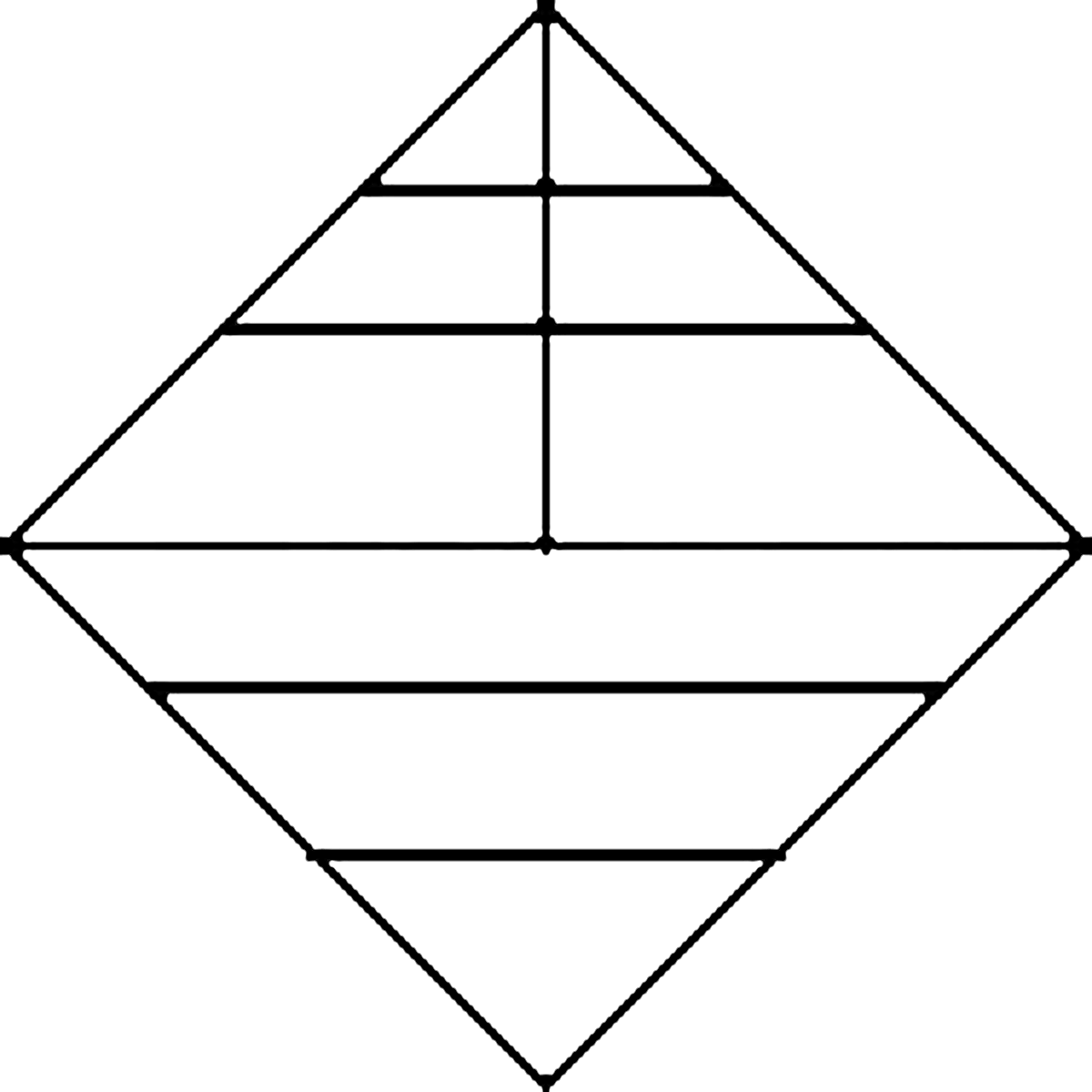
खाली दिलेल्या आकृतीत किती त्रिकोण आहेत?
How many triangles are there in the figure given below ?

पर्याय (Options):
A
14
B
13
C
11
D
अचूक उत्तर (Official Answer)
12
सविस्तर स्पष्टीकरण (Detailed Explanation):
अचूक उत्तर: पर्याय (4)
दिलेल्या समभुज चौकोनी (Diamond) आकृतीची मध्य रेषेनुसार (Horizontal Equator) दोन मुख्य भागांमध्ये विभागणी करून त्रिकोण मोजू:
१) वरचा पिरॅमिड (Upper Pyramid - उभी मध्यगा असणारा):
- वरच्या भागात ३ क्षितिजसमांतर पातळ्या (Levels) आहेत.
- शिरोबिंदूतून काढलेल्या उभ्या मध्यगेमुळे प्रत्येक पातळीवर २ लहान त्रिकोण व १ मोठा संयुक्त त्रिकोण असे $1 + 2 = 3$ त्रिकोण तयार होतात:
- पातळी १ (लहान पाया): ३ त्रिकोण
- पातळी २ (मधला पाया): ३ त्रिकोण
- पातळी ३ (मध्य रेषा पाया): ३ त्रिकोण
$$\text{वरच्या भागातील एकूण त्रिकोण} = 3 \times 3 = 9$$
२) खालचा पिरॅमिड (Lower Pyramid - उभी मध्यगा नसणारा):
- खालच्या भागातही ३ क्षितिजसमांतर पातळ्या आहेत.
- परंतु येथे कोणतीही उभी मध्यगा नाही, त्यामुळे प्रत्येक पातळीच्या पायावर तळाच्या शिरोबिंदूशी केवळ १ त्रिकोण तयार होतो:
- तळ पातळी १: १ त्रिकोण
- तळ पातळी २: १ त्रिकोण
- तळ पातळी ३ (मध्य रेषा पाया): १ त्रिकोण
$$\text{खालच्या भागातील एकूण त्रिकोण} = 3 \times 1 = 3$$
३) संयुक्त त्रिकोण (Combined across Equator): मध्य रेषेच्या आरपार जाणारी कोणतीही तिरकस रेषा नसल्याने उभयपक्षीय संयुक्त त्रिकोण शून्य ($0$) आहेत.
$$\text{एकूण त्रिकोण} = 9 \text{ (वरचे)} + 3 \text{ (खालचे)} = 12$$
म्हणून, दिलेल्या आकृतीत एकूण १२ त्रिकोण आहेत (पर्याय ४ योग्य).
स्पष्टीकरण आकृती (Solution Visual Diagram):
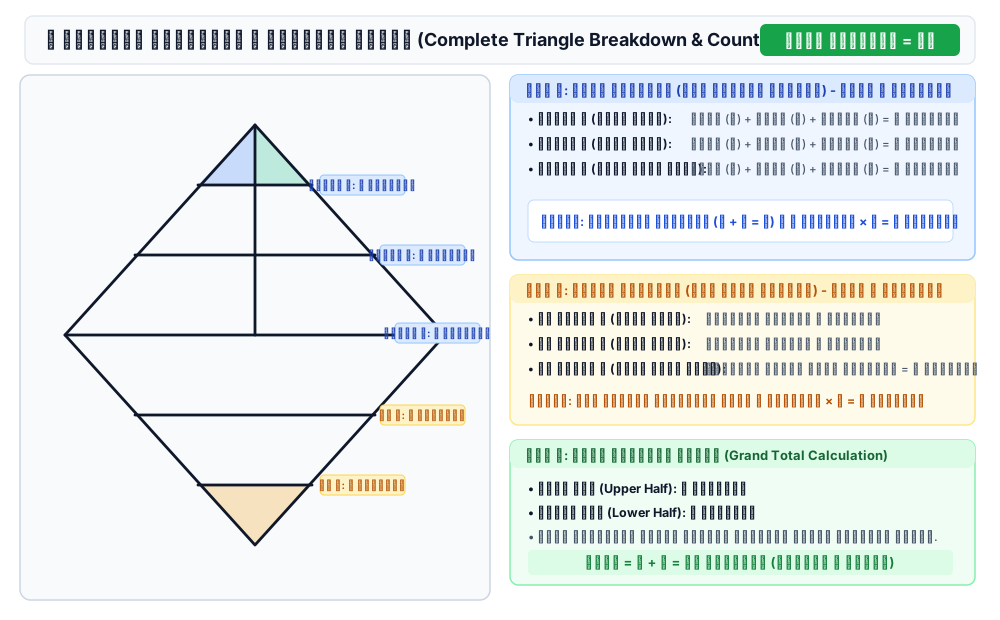

स्पष्टीकरणाची आकृती / संदर्भ तक्ता
परीक्षेतील संभाव्य चूक / Exam Trap:
विद्यार्थी आकृतीची वरची आणि खालची बाजू एकसारखीच (Symmetrical) आहे असे गृहीत धरण्याची घाई करतात. परंतु बारकाईने पाहिल्यास, वरच्या भागात उभी मध्यगा रेषा आहे, तर खालच्या भागात उभी मध्यगा रेषा नाही! त्यामुळे वर ३×३=९ तर खाली केवळ ३×१=३ त्रिकोणच तयार होतात.
स्मृती क्लृप्ती / Memory Booster & Mnemonic:
"वर मध्यगा म्हणून ३×३=९, खाली मध्यगा नाही म्हणून ३×१=३; ९ + ३ = १२ पक्का नियम!"
पर्याय निर्मूलन पद्धत / Option Elimination Strategy:
- पर्याय १ (14): अयोग्य; खालच्या भागातही उभी मध्यगा कल्पून मोजल्यास $9 + 5 = 14$ ही चुकीची अति-संख्या येते. - पर्याय २ (13): अयोग्य; कल्पित त्रिकोण मोजल्यामुळे १३ उत्तर येते. - पर्याय ३ (11): अयोग्य; वरच्या भागातील एक पातळी वगळल्यास ११ उत्तर येते. - पर्याय ४ (12): योग्य उत्तर; वरचे ९ + खालचे ३ = १२ त्रिकोण तंतोतंत सिद्ध होतात.