
Quantitative Aptitude
Percentage, Profit, Loss & Discount
FMT-01
पडताळलेले उत्तर (Verified)
MPSC सराव प्रश्न:
वॉशिंग मशीनची किंमत टीव्हीच्या किमतीपेक्षा १६% कमी आहे. जर वॉशिंग मशीनच्या किमतीत ८०% वाढ झाली आणि टीव्हीच्या किमतीत ४४% घट झाली, तर ५ वॉशिंग मशीन आणि २ टीव्हीच्या एकूण किमतीत किती टक्के बदल होईल?
The cost of a washing machine is 16% less than the cost of a TV. If the cost of the washing machine increases by 80% and that of the TV decreases by 44%, then what is the percentage change in the total cost of 5 washing machines and 2 TVs?
पर्याय (Options):
A
38% ने घट
B
अचूक उत्तर (Official Answer)
40% ने वाढ
C
43% ने वाढ
D
37% ने घट
सविस्तर स्पष्टीकरण (Detailed Explanation):
अचूक उत्तर: पर्याय (2)
टीव्हीची सुरुवातीची किंमत ($T$) = १०० मानू.
वॉशिंग मशीनची ($W$) सुरुवातीची किंमत = $१०० - १६ = ८४$.
१. सुरुवातीची एकूण किंमत (५ WM + २ TV):
$$\text{सुरुवातीची एकूण किंमत} = (५ \times ८४) + (२ \times १००) = ४२० + २०० = ६२०$$
२. बदलानंतर नवीन किमती:
• नवीन वॉशिंग मशीन: $८४ \times १.८ = १५१.२$
• नवीन टीव्ही: $१०० \times ०.५६ = ५६$
३. नवीन एकूण किंमत (५ WM + २ TV):
$$\text{नवीन एकूण किंमत} = (५ \times १५१.२) + (२ \times ५६) = ७५६ + ११२ = ८६८$$
४. टक्केवारी बदल:
$$\text{निव्वळ बदल} = ८६८ - ६२० = +२४८$$
$$\text{टक्केवारी बदल} = \frac{२४८}{६२०} \times १०० = \mathbf{४०\% \text{ वाढ}}$$
स्पष्टीकरण आकृती (Solution Visual Diagram):
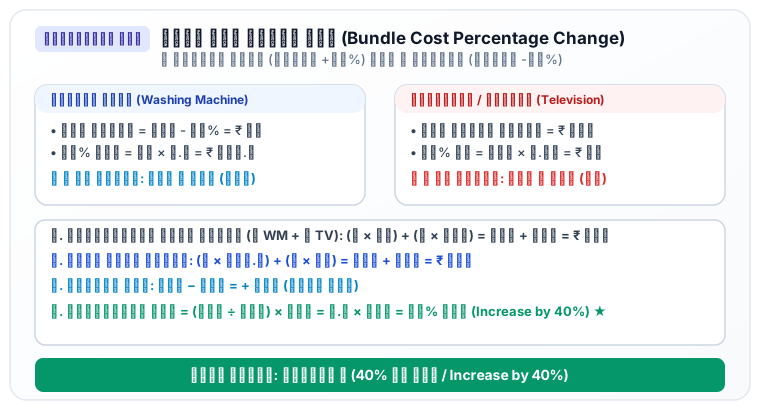

स्पष्टीकरणाची आकृती / संदर्भ तक्ता
परीक्षेतील संभाव्य चूक / Exam Trap:
८०% वाढ आणि ४४% घट यांची साधी सरासरी काढू नका; वस्तूंची संख्या (५ व २) एकूण खर्चात भारित प्रमाण ठरवते.
स्मृती क्लृप्ती / Memory Booster & Mnemonic:
टीव्ही = १०० मानून ५ WM आणि २ TV ची सुरुवातीची व नंतरची एकूण किंमत काढा!
पर्याय निर्मूलन पद्धत / Option Elimination Strategy:
१. 38% ने घट: एकूण बदल धन (+२४८) असल्याने वाढ झाली आहे. २. 40% ने वाढ: अचूक पर्याय (२४८ ÷ ६२० × १०० = ४०% वाढ). ३. 43% ने वाढ: चुकीचा पर्याय. ४. 37% ने घट: चुकीचा पर्याय.