
Geography
Climatology
पडताळलेले उत्तर (Verified)
MPSC सराव प्रश्न:
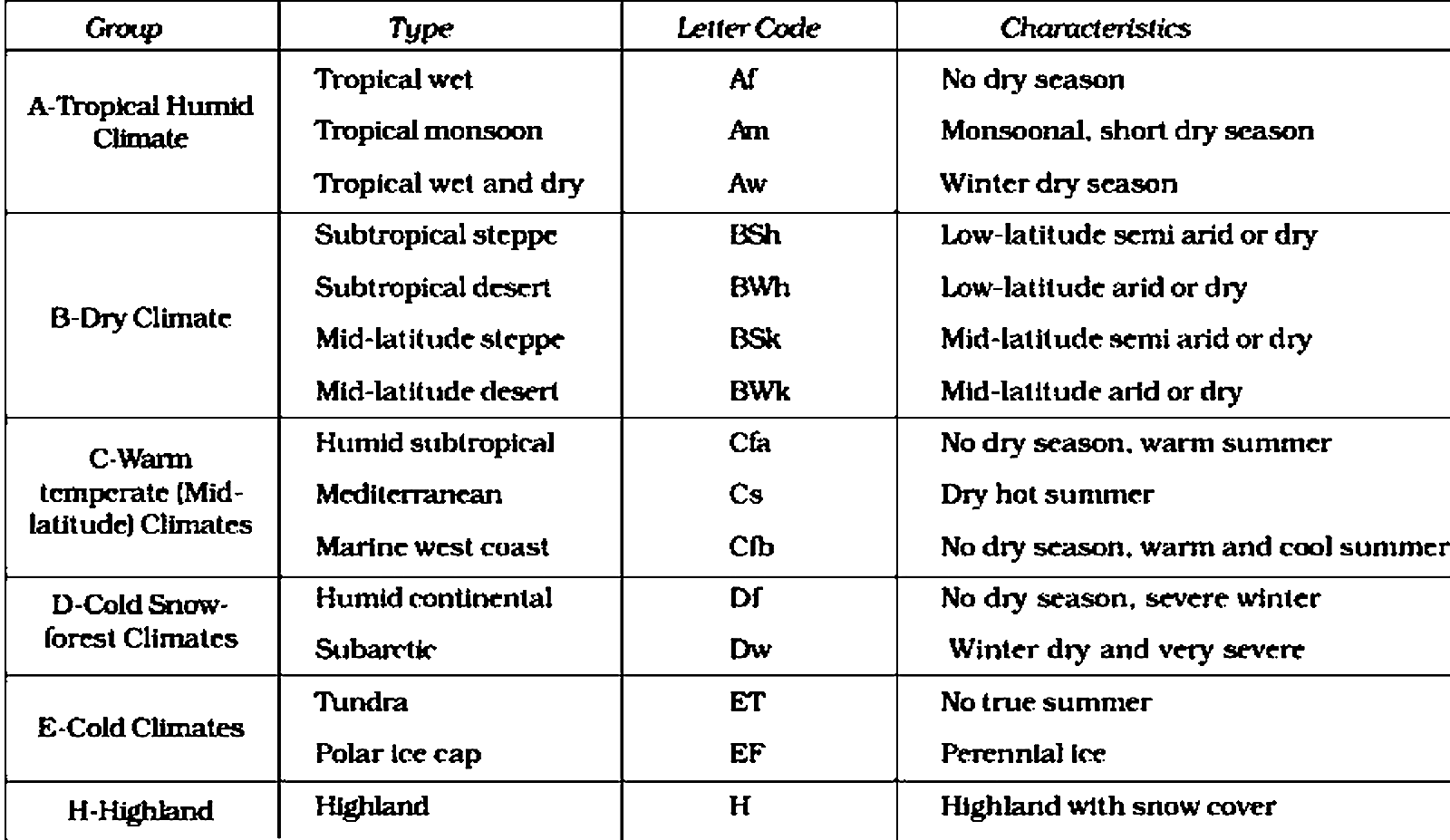
जोड्या जुळवा: +---------------+-------------------------------+-------+-----+ | हवामान प्रकार | कोपेन चिन्ह | | | +---------------+-------------------------------+-------+-----+ | (a) | विषुववृत्तीय आर्द्र | (i) | Csa | | (b) | उष्णकटिबंधीय आर्द्र आणि कोरडे | (ii) | Am | | (c) | विषुववृत्तीय मोसमी | (iii) | Af | | (d) | भूमध्यसागरीय | (iv) | Aw | +---------------+-------------------------------+-------+-----+
Match the following: +-----+----------------------+-------+----------------+ | | Climate Type | | Koeppen Symbol | +-----+----------------------+-------+----------------+ | (a) | Humid equatorial | (i) | Csa | | (b) | Tropical wet and dry | (ii) | Am | | (c) | Equatorial monsoon | (iii) | Af | | (d) | Mediterranean | (iv) | Aw | +-----+----------------------+-------+----------------+
पर्याय (Options):
A
(a) - (ii), (b) - (iv), (c) - (i), (d) - (iii)
B
अचूक उत्तर (Official Answer)
(a) - (iii), (b) - (iv), (c) - (ii), (d) - (i)
C
(a) - (iii), (b) - (i), (c) - (ii), (d) - (iv)
D
(a) - (iv), (b) - (ii), (c) - (iii), (d) - (i)
सविस्तर स्पष्टीकरण (Detailed Explanation):
अचूक उत्तर: पर्याय (2)
योग्य उत्तर (a) - (iii), (b) - (iv), (c) - (ii), (d) - (i) आहे.
स्पष्टीकरण आणि महत्त्वाचे मुद्दे:
+---------------+-------------------------------+-------+-----+
| हवामान प्रकार | कोपेन चिन्ह | | |
+---------------+-------------------------------+-------+-----+
| (a) | विषुववृत्तीय आर्द्र | (i) | Af |
| (b) | उष्णकटिबंधीय आर्द्र आणि कोरडे | (ii) | Aw |
| (c) | विषुववृत्तीय मोसमी | (iii) | Am |
| (d) | भूमध्यसागरीय | (iv) | Csa |
+---------------+-------------------------------+-------+-----+
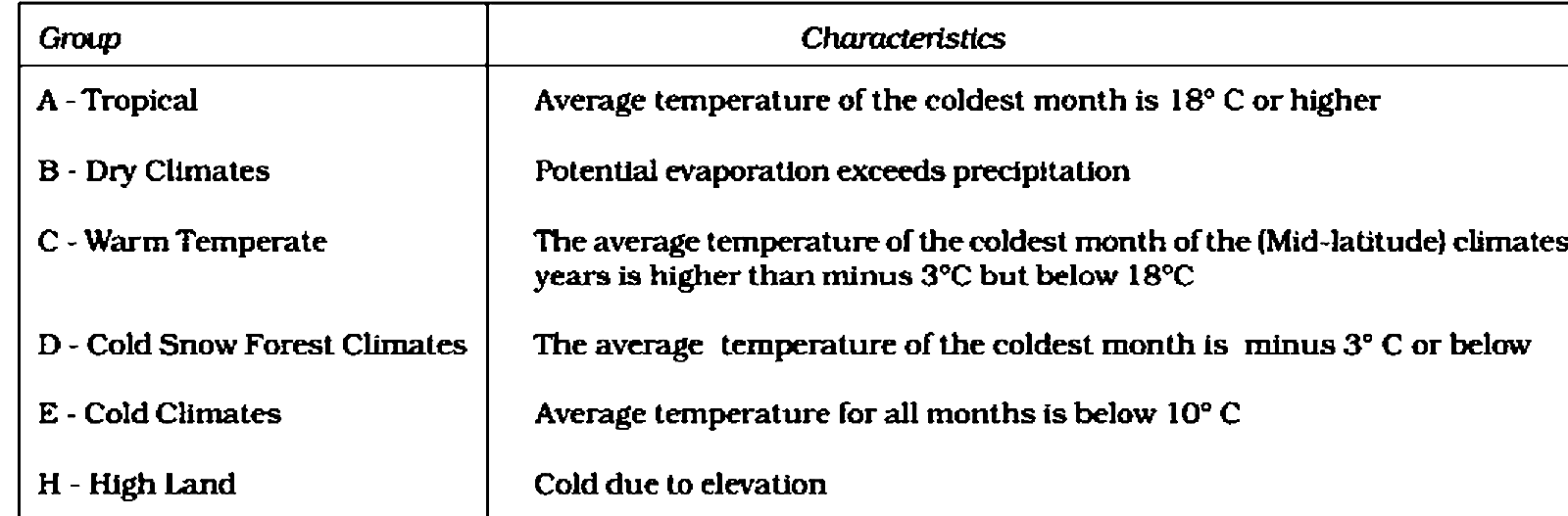
कोपेन हवामानाचे वर्गीकरण:
• कोपेनच्या हवामान क्षेत्रांचे प्रायोगिक वर्गीकरण सरासरी वार्षिक आणि सरासरी मासिक तापमान आणि पर्जन्य डेटावर आधारित आहे.
• कोपेनच्या म्हणण्यानुसार वनस्पती आणि हवामानाचा प्रसार एकमेकांशी अतूट संबंध आहे.
• कोपेनचे हवामान वर्गीकरण हे सर्वात जास्त वापरले जाणारे हवामान वर्गीकरण आहे.
• व्लादिमीर पीटर कोपेन यांनी 1884 मध्ये ही हवामान वर्गीकरण प्रणाली तयार केली.
• त्याने पाहिले की वनस्पतींचा प्रसार आणि हवामान यांचा अतूट संबंध आहे.
• वर्गीकरण वार्षिक आणि मासिक तापमान आणि पर्जन्य सरासरीवर आधारित आहे.
• त्याने तंतोतंत तापमान आणि पर्जन्य पातळी निवडली, त्यांना वनस्पती वितरणाशी जोडले आणि हवामान नियुक्त करण्यासाठी या मूल्यांचा वापर केला.
• A, B, C, D, E, आणि H हे कोपेन हवामान वर्गीकरण प्रणालीद्वारे मान्यताप्राप्त पाच प्राथमिक हवामान श्रेणी आहेत.
• f, m, w आणि s ही छोटी अक्षरे आर्द्रपणाचे ऋतू दर्शवतात.
• f - आर्द्र हंगाम नाही
• m – मान्सून हवामान
• w- हिवाळा आर्द्र हंगाम
• s - उन्हाळा आर्द्र हंगाम
• तापमानाची तीव्रता a, b, c आणि d या लहान अक्षरांनी दर्शविली जाते.
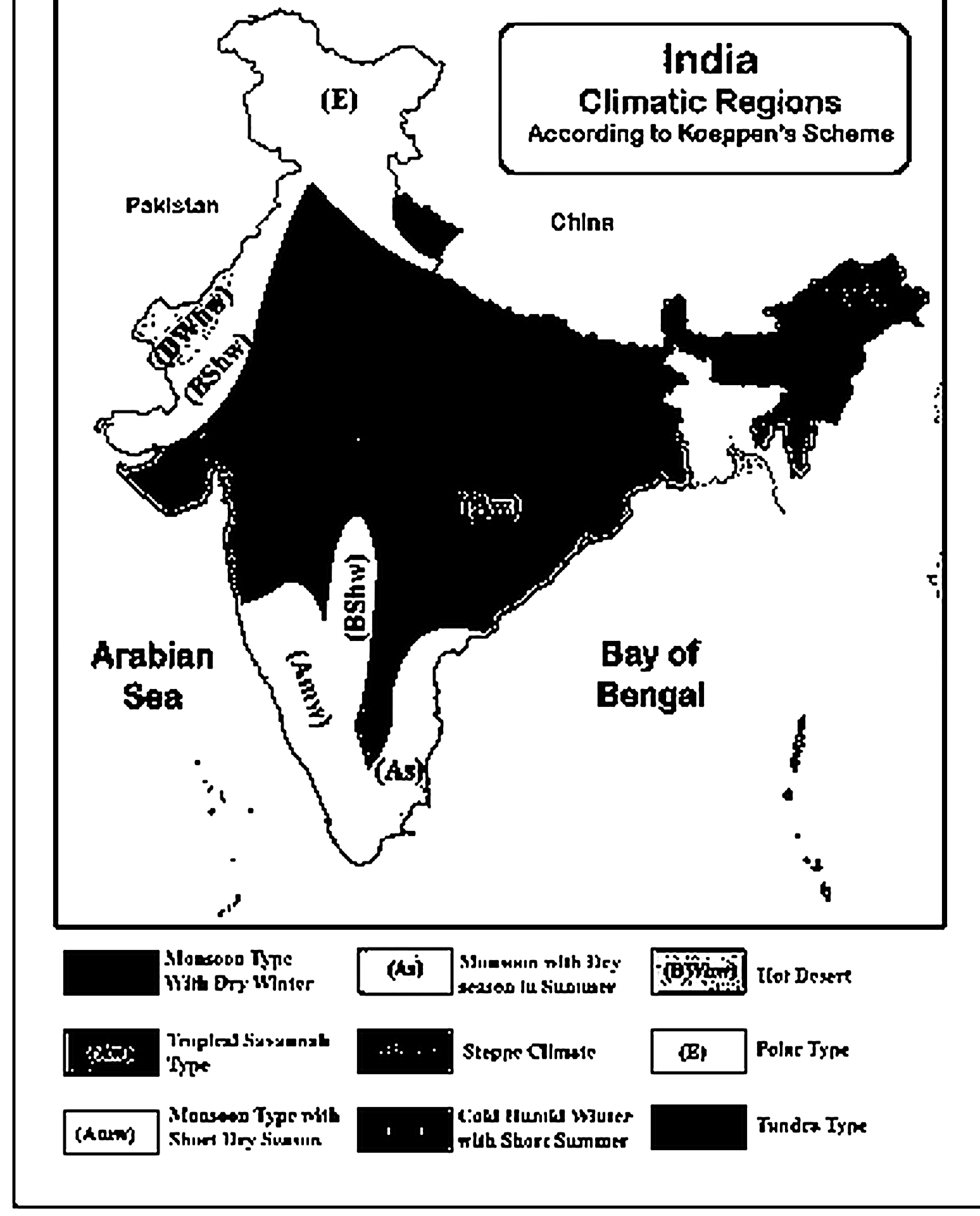
• कोपेनने भारताचे नऊ हवामान झोनमध्ये वर्गीकरण केले.
स्पष्टीकरण आकृती (Solution Visual Diagram):
Solution Diagram
Solution Diagram
Solution Diagram